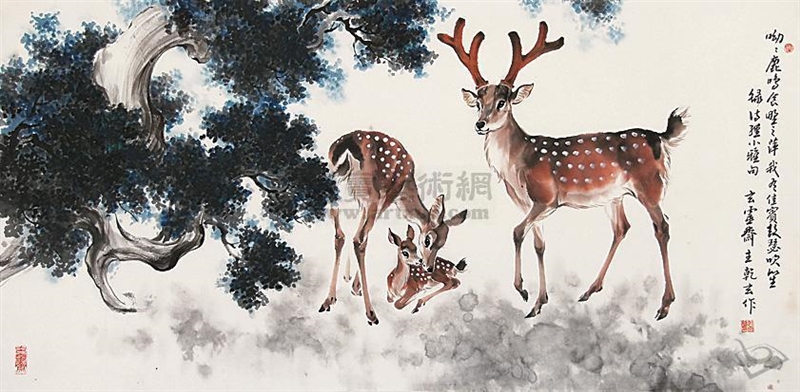
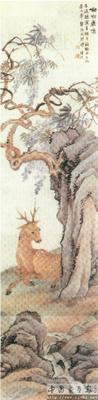
“Oh, the deer call softly, feeding on wild grass. Oh, the deer call softly, feeding on mugwort. Oh, the deer call softly, feeding on goldenrod.
Book of Songs: Minor Odes
[Annotation] "Ping" refers to Artemisia argyi, commonly known as mugwort or wormwood; "Qin" denotes plants of the Artemisia genus; "Tu" means to slaughter.
Destiny brings us together
Long ago, the Spirit of Mugwort lived freely in the wilds. But when the Deer Spirit arrived, it greedily consumed their offspring, turning the land into a barren wasteland.
One day, the god led the other gods, took ropes and bows, captured and sacrificed a young deer, drove away the Deer God, and thus avoided a catastrophic disaster.
To repay a great kindness, Hao Shen has offered his most precious treasure (Artemisinin), thenTu YouyouThis is the origin.
——Wang Zhimin's New Interpretation
Development of Artemisinin
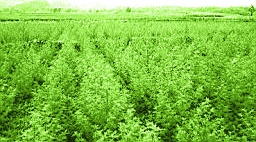
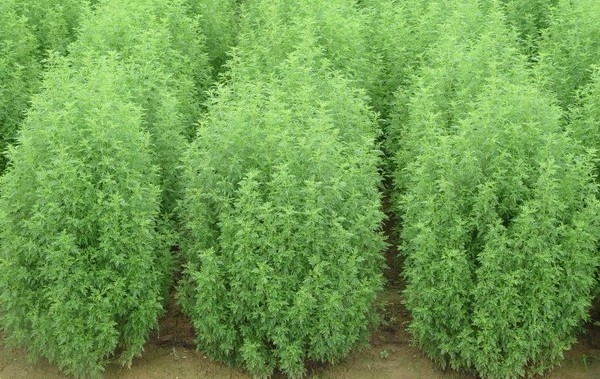
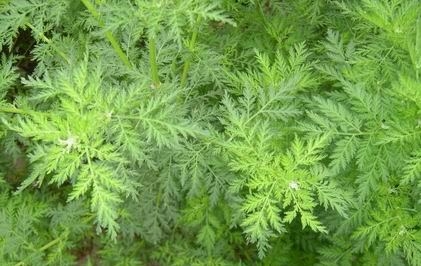
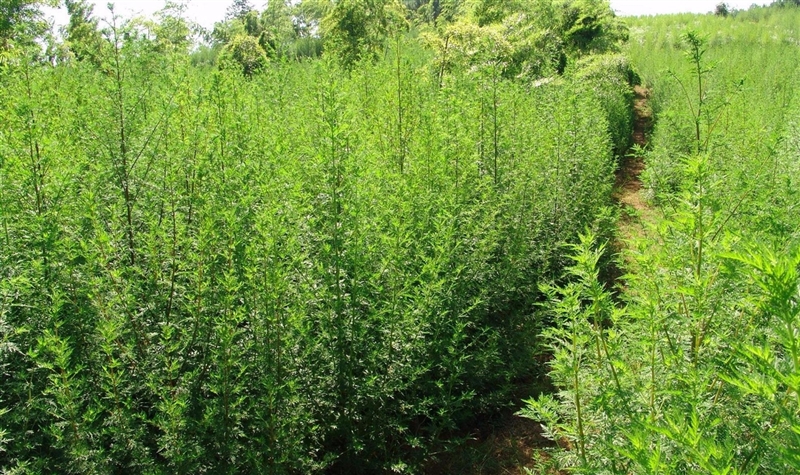
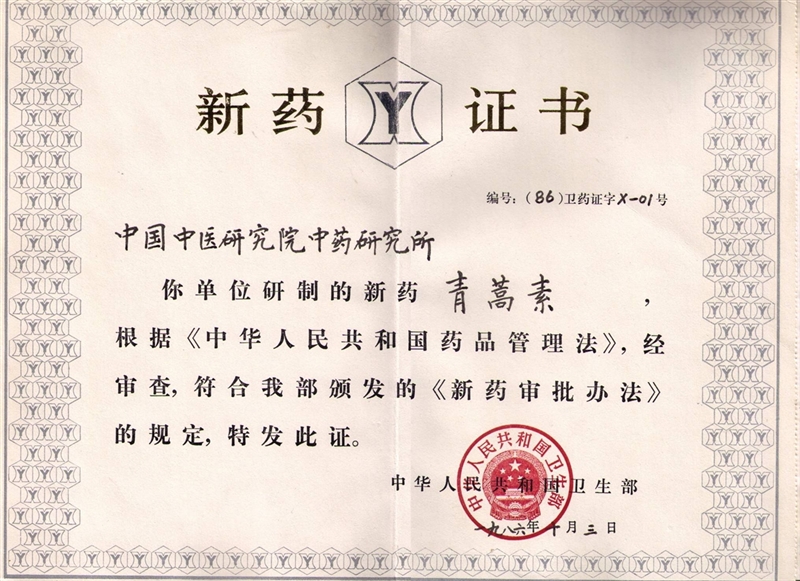
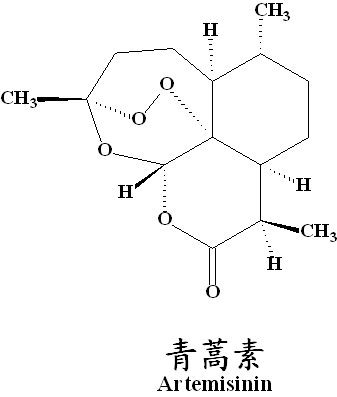
The fame of Artemisia annua stems from itsArtemisininIt features a novel structural type (peroxide) and stands out for its“Efficient,
Fast-acting, low toxicity”Key feature: It addresses the global challenge of treating chloroquine-resistant Plasmodium falciparum malaria, marking a major breakthrough in worldwide malaria control.
A major breakthrough: Traditional Chinese medicine is making a significant contribution to people worldwide. Artemisinin-based drugs have become the current WHO standard for controlling
First-line drug for malaria worldwide.
I. High Casualties in the Vietnam War: Malaria Was to Blame
In the 1960s, Plasmodium falciparum developed resistance to first-line antimalarial drugs like chloroquine, leading to widespread malaria outbreaks.This has left hundreds of millions of patients without treatment options, forcing nations to resort to desperate measures. This was especially evident during the Vietnam War, where malaria outbreaks and the emergence of drug resistance became critical challenges.Chloroquine and other drugs proved ineffective; both sides suffered heavy casualties.
The U.S. military screened over 300,000 compounds in search of new antimalarial drugs to address this "top medical issue."
At the request of the Government of Vietnam, China has also...1964Since the year, anti-malaria research has been conducted within the military.to1967In China, a unit designated as "523Office, organizing seven national regionsProvinces and cities, along with dozens of organizations, collaborated to screen over 40,000 compounds and traditional Chinese medicines.
At this point, all parties remain at an impasse.
II. Uncover Hidden Gems: Opportunities Arise in Crisis
In a dilemma,1969Year1Month21Day“523”Office leadership assigned the task to the Traditional Chinese Medicine Institute, stating: "We hope you will participate in this initiative."Leaders of the institute and research department stated“We cannot decline; we must do our utmost to fulfill the tasks assigned by the Party!”Tu Youyou was immediately appointed as the project leader, responsible for overall operations.
During the Cultural Revolution, all scientific research was suspended. Professor Tu began by systematically collecting and organizing historical medical texts and materia medica. She consulted renowned traditional Chinese medicine physicians (such as Pu Youzhou and Yue Meizhong, who recommended numerous effective prescriptions) and, within three months, compiled a comprehensive collection of internal and external remedies derived from plants, animals, and minerals.2000more than, and organize into640a collection of single and verified prescriptions for anti-malaria treatment, primarily based on more than a dozen formulas, and subsequently1969Year4Monthly oil printed into a booklet and submitted.“523”OfficeDistribute to the seven provincial and municipal research units responsible for the task to resolve the shortage of available medicine in various regions.
At the same time, Tu Youyou personally prepared dozens of traditional Chinese medicine extracts and sent them to collaborating institutions (the Academy of Military Medical Sciences) for screening.
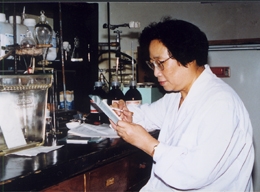
To further engage with frontline operations,1969Year7Visit Hainan on-site to experience life and verify that the pepper extract achieves a protozoa inhibition rate of {0}%.84%), resulting in effective fever reduction but poor suppression of Plasmodium.
1971Year5Month22National conference held in Guangzhou“523”The conference, led by three ministries (Ministry of Health, General Logistics Department of the Ministry of Defense, and Ministry of Chemical Industry) and one institute (Chinese Academy of Sciences), received an encouraging telegram from Premier Zhou.
After the Ministry of Health was designated as the leading body, the Institute of Traditional Chinese Medicine under the Ministry of Health served as the primary implementing unit. Motivated by the directive that "Chinese medicine is a great treasure that must be vigorously explored and elevated," the institute's scientists studied and internalized this guidance deeply, igniting their unwavering resolve to conquer malaria.
1971Year7In {0}, the Institute of Traditional Chinese Medicine established its first4The team established an animal model and began screening. What was screened? (Already screened.)100Multiple samples, all failed.
Select new drugs for screening! Re-screen TCMs showing high efficacy.
Artemisia has once had68%Suppress malaria results; display only during re-screening.40%inhibition rate. Further screening was conducted.100Multiple samples tested, but no satisfactory results yet.
What should I do? What should I do?
A voice rang in my ear.Traditional Chinese medicine is a great treasure trove.Professor Tu's spirits lifted as he resumed his study and research of traditional Chinese medicine literature.
Upon reading "Handy Prescriptions for Emergencies"“Take a handful of sweet wormwood, steep it in one sheng of water, extract the juice, and consume it entirely.”After the record of malaria prevention, Professor Tu pondered deeply: "Traditional Chinese medicines are usually decoctions. Why did Ge Hong insist on extracting juice?" "Is it thermally unstable?" Let's try!
How about extracting at low temperatures using low-boiling solvents? Indeed, the efficacy has improved significantly, but so has the toxicity!
Are toxic components and active ingredients different? Give it a try!
Split the extract into neutral and acidic fractions. Results: The acidic fraction was inactive and highly toxic, while the neutral fraction showed better efficacy—promising!
Mugwort medicinal materials have many stems and few leaves; the stems are ineffective (contain no artemisinin). With numerous varieties—only Artemisia annua contains arteminin, while others do not—the screening research has been like searching for a needle in a haystack or feeling an elephant blindfolded, yielding no effective results.-Valid-Through the torment of despair, hopelessness, and fleeting hope, she worked day and night.
Hard work pays off. How can you see the rainbow without rain? Destiny is always worth waiting for.
Finally1971Year10Month4Day,191Sample {0} shows100%P. berghei inhibition results! Consistent with P. cynomolgi findings!1972Year11Month8The day the first artemisinin crystals were obtained internationally.
Editor's Analysis:Many institutions previously conducted artemisinin-based malaria screening but found no results. Other components in the raw Artemisia annua material can damage the peroxide structure of artemisinin during extraction, causing loss of antimalarial activity and leading to false-negative conclusions. This indicates that…Should be developed and improvedThis guidance is profound, directing us not only to inherit but also to scientifically preserve and advance traditional Chinese medicine research.
III. Following Shen Nong's Legacy: A Clinical Breakthrough with Artemisinin
1971After the successful discovery of artemisinin's antimalarial properties in the {0}s,1972Year3Month8Day“523”At the plenary session of "Research on Malaria Prevention and Treatment Drugs," Professor Tu Youyou delivered a“Guiding antimalarial research on Chinese herbal medicines with Mao Zedong Thought”The report sparked excitement across the room, leading to an immediate decision to conduct a clinical efficacy study.
Despite extensive preclinical toxicity studies across various animal models, controversy persisted. To expedite clinical trials, Professor Tu pledged to the Party her determination to follow the example of ancient scholars by taking the first dose herself. Two colleagues joined her in this commitment, and all three were hospitalized for comprehensive monitoring. Their perseverance paid off: the active components of Artemisia annua were finally confirmed.1972Year8The month has entered clinical trials.
On-site in the malaria-endemic area of Changjiang, Hainan, and302In clinical trials at the hospital, the results proved remarkably effective, sparking a new wave of nationwide research on artemisinin for malaria treatment. That same year, Professor Tu's team successfully isolated the active antimalarial component from the effective fraction of Artemisia annua.——Named Artemisinin, and1973Clinical trials conducted again this year confirmed that artemisinin is an effective antimalarial component.
Congratulations from peers nationwide, seeking guidance and exchange. For example: Yunnan Institute of Drug Research “Congratulations on your remarkable achievements in researching Qinghao (Artemisia annua) for malaria treatment. We commend your work and look forward to learning from you.”,“Inspired by your institution, our office plans to conduct a study this year on the Artemisia species produced in our province.ArtemisiaTo reduce guesswork in plant-based antimalarial screening, please share your valuable experience and insights on Artemisia annua research.…to support our work”Shandong Provincial Institute of Parasitic Diseases Control and Prevention “According to the National Malaria Research Office, you72Artemisinin has already been tested in clinical trials, and new progress has been made in its research. To further learn from you, the National Malaria Control Office is contacting your institution directly. Please share your valuable experiences regarding artemisinin's animal toxicity studies, chemical composition analysis, clinical formulations, and dosage recommendations so that your expertise can be successfully applied in our province.”。
1974Year, affected by“523”Submit Power of Attorney, Chinese Academy of Traditional Chinese Medicine2Month28Day3Month1Hosted the Artemisinin Collaboration Meeting and publicly unveiled all experimental results from the Institute of Traditional Chinese Medicine's artemisinin research, providing a detailed overview and conducting on-site tours. This initiative fostered nationwide collaboration involving up to [number] participating units.40piece, have10Clinical trials conducted across provinces, cities, and autonomous regions, with a total of6555Examples of Artemisinin-based formulations include:2099Example.
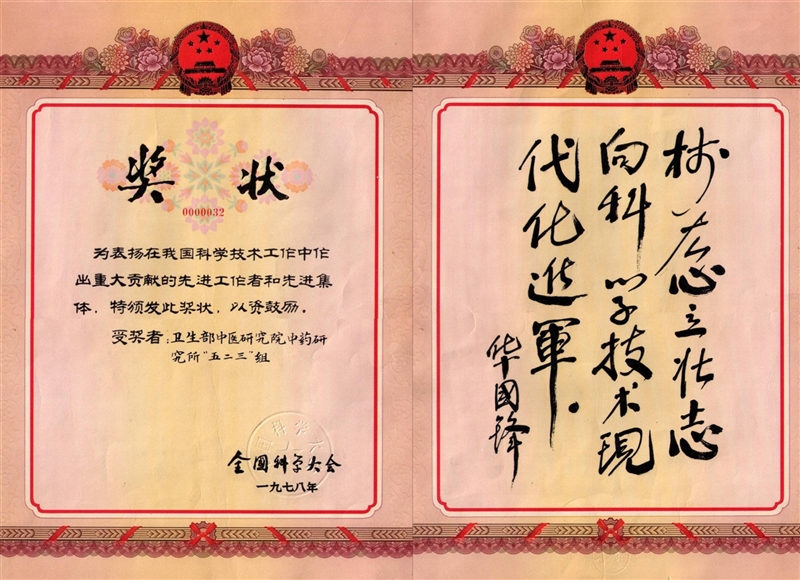
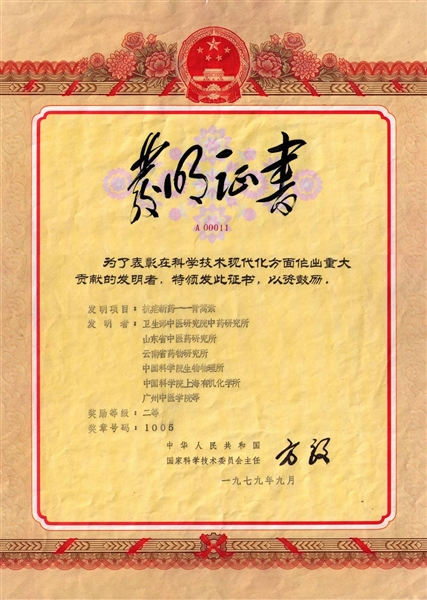
With the joint efforts of pharmacy and pharmaceutical science professionals nationwide, artemisinin has achieved remarkable success! Unfortunately, in1979When the National Invention Award was conferred, only six units were allowed to be listed as recipients. Consequently, many units that made significant contributions to the discovery of artemisinin were not included in the official list. The Institute of Traditional Chinese Medicine Materia Medica, China Academy of Chinese Medical Sciences, was named the primary inventor unit not merely because it first identified the active fraction of Artemisia annua, but more importantly because it was the first to obtain pure artemisinin crystals. This achievement is not only a personal honor for Professor Tu Youyou but also the result of her team's relentless efforts. It represents an honor for the Institute of Traditional Chinese Medicine Materia Medica, the China Academy of Chinese Medical Sciences, and the entire traditional Chinese medicine industry.
Editor's Note: Fate brings people together, but effort keeps them there!