

Takes the award from Tu Youyou2015Nobel Prize in Medicine
Swedish local time16:30,2015The Nobel Prize Ceremony was held at the Stockholm Concert Hall in Sweden. Researcher Tu Youyou, wearing a bright purple long suit dress, ascended the stage one by one with other laureates to take their seats. Representatives of the Nobel Committee for Physiology or Medicine introduced the prize winner, Tu Youyou, and the two other scientists, William·After Campbell and Ōmura received their awards, King Carl XVI Gustaf of Sweden·Gustaf presented Youyou Tu with her Nobel Prize certificate, medal, and prize money as the audience cheered with applause. Researcher Youyou Tu became the first Chinese scientist to receive the Nobel Prize in Physiology or Medicine. This marks the first time a scientific award has been won by research conducted within China by Chinese scientists, representing the highest honor ever achieved by China's medical community and the top recognition for traditional Chinese medicine achievements.
Hans, member of the Nobel Prize Committee in Physiology or Medicine·Forsberg praised Tu Youyou's scientific contributions in his award citation. He said,“About {0} per year50Thousands die from malaria, most of them children. In20Century60and70In the 1960s, Tu Youyou joined a key Chinese project to develop an anti-malaria drug. While reviewing ancient texts, she noticed that qinghao (sweet wormwood) was repeatedly mentioned in fever treatments. She then tested extracts of qinghao on mice infected with malaria. The results showed partial success: some malaria parasites died, but outcomes were inconsistent. Tu Youyou returned to the ancient texts for further guidance. In one1700In ancient texts before the Lunar New Year, she discovered a low-temperature extraction method for sweet wormwood (Artemisia annua). The resulting extract proved highly effective in killing all parasites. The active component was later identified and named artemisinin. Subsequent research revealed that artemisinin kills parasites through a unique mechanism. Tu Youyou's discovery of artemisinin spurred the development of new antimalarial drugs, which have saved millions of lives and transformed15The annual malaria mortality rate has been reduced by half.”。
Furberg praised the three Physiology or Medicine Prize laureates, including Tu Youyou, for their discoveries' immeasurable global impact and contribution to humanity. These breakthroughs not only provide revolutionary new treatments for patients suffering from parasitic diseases but also promote societal prosperity and human well-being.
Representatives from the Swedish Royal Family, Government Cabinet, Nobel Prize Awarding Institutions, Foreign Diplomatic Missions in Sweden, and various sectors of society1300Multiple attendees at the ceremony.
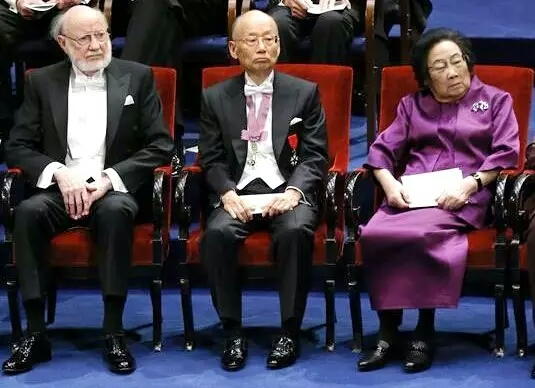
20152015 Nobel Prize in Medicine Laureates: William Campbell (left), Satoshi Ōmura (center), Tu Youyou (right)
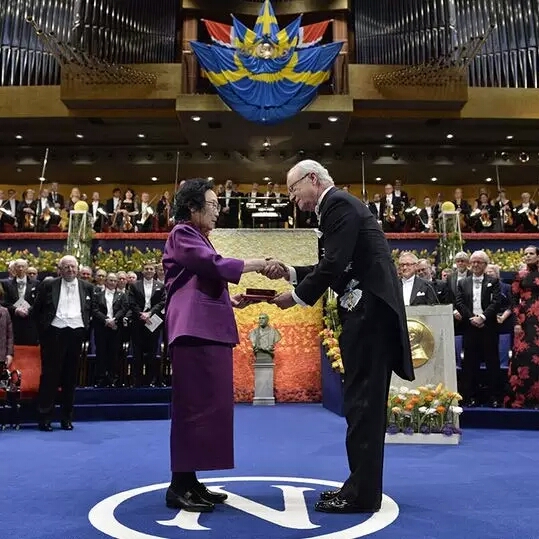
King Carl XVI Gustaf of Sweden presents the Nobel Prize to Tu Youyou.
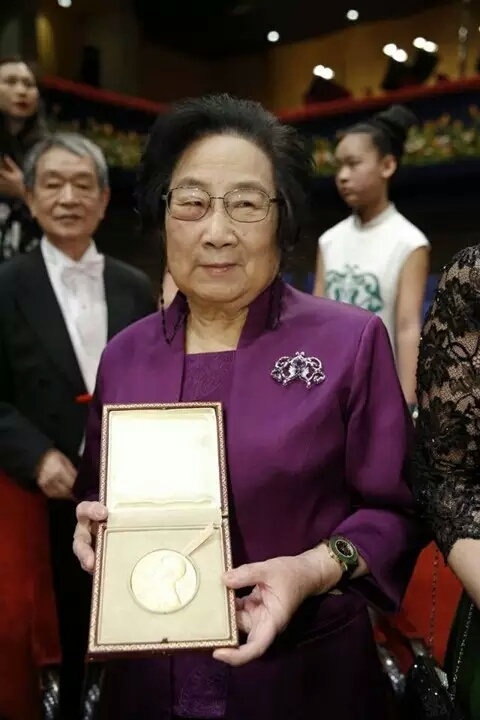
Researcher Tu Youyou displays her Nobel Prize medal.